Lesson 1 of 103 min read
What you're actually buying
A hot tub is a loop: a pump pulls water through a filter and a heater and pushes it back out the jets. It comes in three kinds, acrylic, rotomolded and inflatable, and they differ most in weight, warranty and how long they last.
In this lesson
- How a hot tub works, in one picture
- The three kinds of hot tub, and which lasts
- What a dealer means by the words they use
How does a hot tub work?
Every hot tub, from the smallest plug-in to the biggest tub on the showroom floor, runs the same loop. Water spills off the surface into the skimmer, where a filter strains out hair, lint and whatever came off the last person in. A pump pulls it through, pushes it past an electric heater and sends it back out the jets. Then round again, all day.
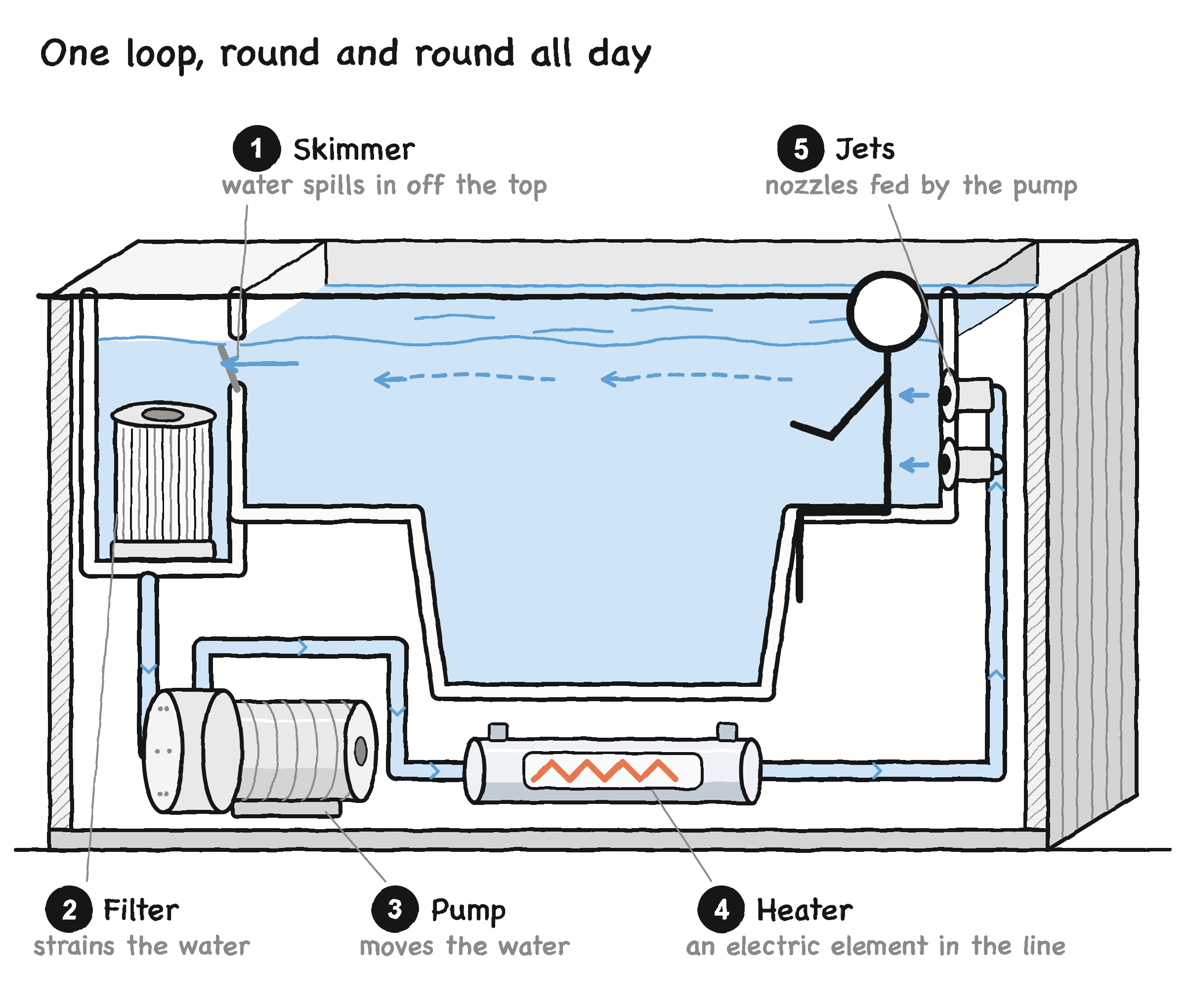
That loop is the whole machine. Everything else either holds the water or keeps the heat in.
What's under the shell?
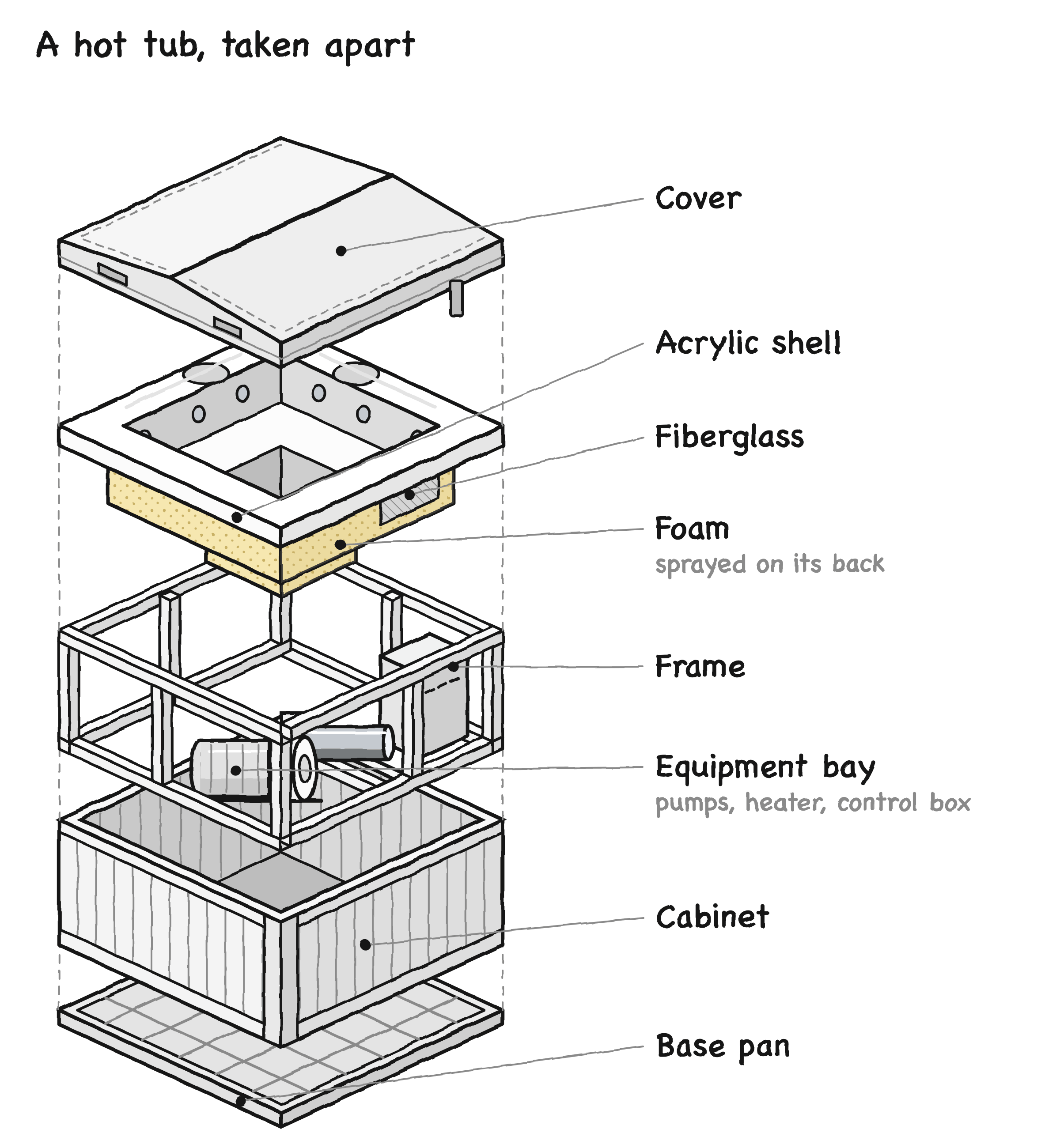
Take a hot tub apart and you get layers: the cover, the acrylic shell you sit in (backed with fiberglass, often wrapped in foam), a frame, the equipment bay with the pumps, heater and control box, the cabinet panels that hide it all, and a base pan.
Notice two things. The parts that wear out sit together behind one panel, where a technician can reach them. And the parts that decide whether the tub lasts, the shell's backing, the plumbing and the foam, are the ones you can't see in a showroom. Lesson 3 shows you how to look anyway.
What are the three types of hot tub?
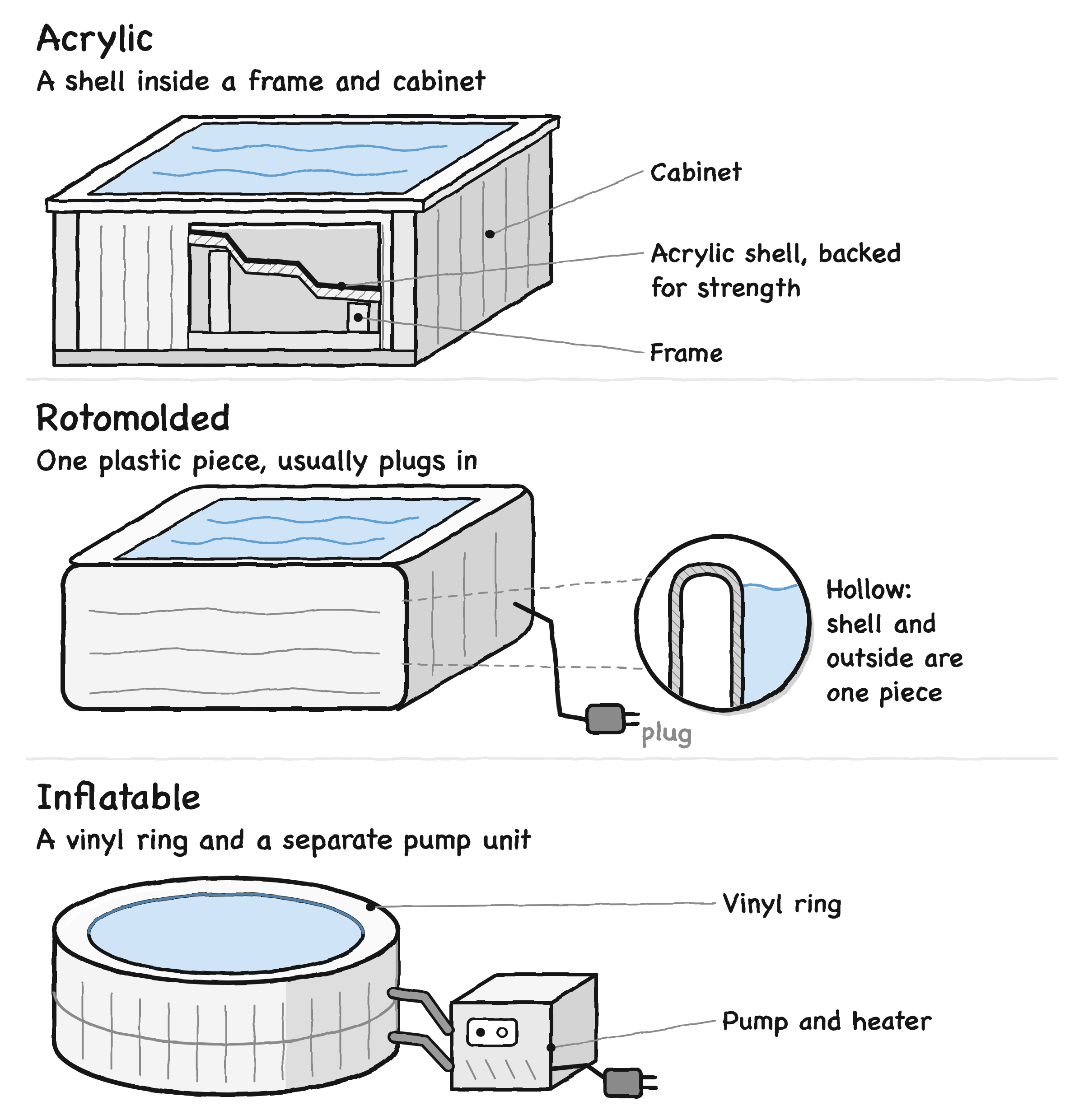
Acrylic. A sheet of acrylic is heated, pulled over a mold and backed with resin and fiberglass, then set in a frame and cabinet. It's the most common type by far: 277 of the 333 tubs we track whose spec sheet names the shell material. The median one weighs about 800 lb empty and carries a 10-year shell structure warranty. Most need a 240V circuit.
Rotomolded. Plastic powder spun inside a heated mold until it forms one hollow piece, shell and outside in one. Lighter (about 390 lb empty), and 13 of the 15 in our data plug into a household outlet. The shell warranty is shorter: a median 5 years.
Inflatable. A vinyl ring with a separate pump-and-heater box. It plugs in and packs away, but the heater is small, 1,300 W on Intex's 120V models, and Bestway says its tubs warm about 2 to 3°F an hour. Warranties run 2 years or less.
Which type of hot tub lasts longest?
Acrylic. Jacuzzi, which sells hard-shell tubs, puts an inflatable's life at 2 to 5 years, a rotomolded tub's at 5 to 10 years and an acrylic tub's at 10 to 15 years. We found no independent study, but the warranties point the same way. For a few summers, an inflatable or a rotomolded tub can do the job. For every winter of the next decade, you're shopping acrylic, and that's what the rest of this course is about. The side-by-side is on inflatable vs hard-shell hot tubs.
Words you'll hear in the showroom
Dealers talk in shorthand. Seven words worth knowing before you walk in:
- Lounger: a full-length seat you lie back in, legs out.
- Full foam: insulation that fills the whole space between the shell and the cabinet, with the pipes buried in it.
- Manifold: a fat pipe near the pump that gives each jet its own hose.
- GPM: gallons per minute, how much water a pump moves. Some makers quote it instead of horsepower.
- 240V, 50A: a 240-volt circuit of its own on a 50-amp breaker, wired by an electrician. Most hot tubs need one.
- GFCI: a safety switch that cuts the power in a split second if current leaks, say through water and a person.
- Ozone: a gas drawn into the plumbing to break down oils and germs. It cuts chlorine use; it doesn't replace it.
The rest are in the glossary.
Next, size. The seat count on a spec sheet isn't how many people will be comfortable, and the lounger everyone wants usually costs a seat. Lesson 2 sizes a tub to your real life, your yard and your body.
Remember this
- Every hot tub is one loop: skimmer, filter, pump, heater, jets.
- What wears out sits in the equipment bay; what decides whether it lasts is hidden under the shell.
- Acrylic tubs weigh more and carry longer shell warranties: a median 10 years against 5 for rotomolded.
- Jacuzzi puts an inflatable's life at 2 to 5 years, an acrylic tub's at 10 to 15 years.
Check yourself
3 quick questions. Tap an answer.
Water leaves the tub through the skimmer. What happens to it next?
You want a tub you'll use every winter for ten years. Which type fits?
A dealer says a tub is “full foam”. What does that mean?
Want more on this?
Each of these goes deeper. They open in the library; the course will be here when you come back.
Lesson 1 done. 9 to go.
Next: lesson 2 · 3 minSize, seats and the lounger question