A hot tub lasts or fails on what you can't see in a showroom: the shell's backing, the plumbing joints, what fills the cabinet, and whether anyone can bring parts and a technician in year eight. Here are the eight build checks, plus insulation.
In this lesson
The eight build checks that decide whether a tub lasts
What full-foam insulation and a self-supporting shell mean
How to check a tub's build in the showroom
Is the shell self-supporting?
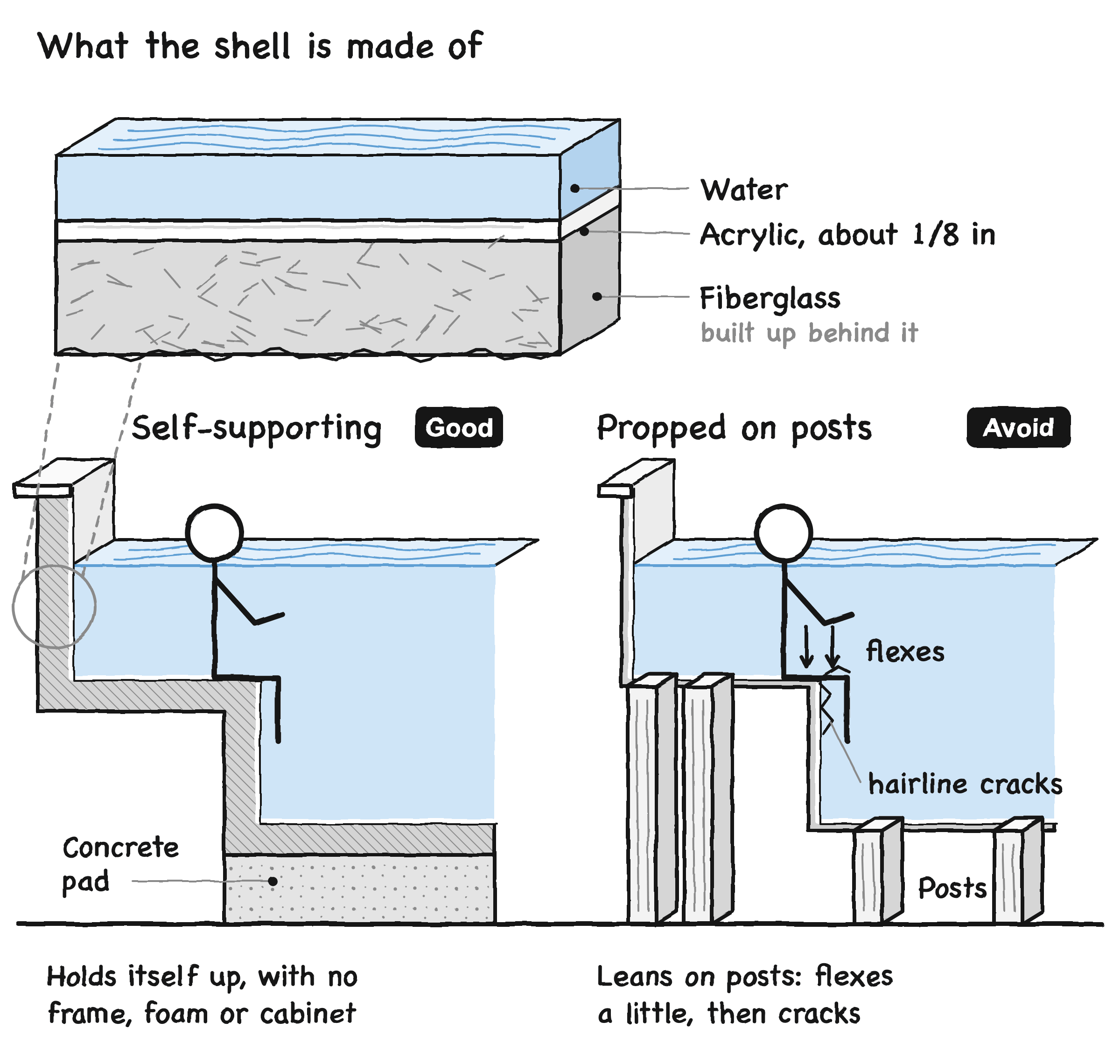
The acrylic you sit on is only about an eighth of an inch thick, so its strength comes from what's bonded behind it. A self-supporting shell has enough fiberglass built up behind it to carry the water and the people on its own: lift it out, set it on concrete, fill it, and it holds.
A thinner shell leans on posts, a frame or foam, and flexes a little every time someone sits down. Over the years that opens hairline cracks at the seat edges and around the jets. A pump is a part you swap. A new shell costs close to a new tub.
How should the plumbing be built?
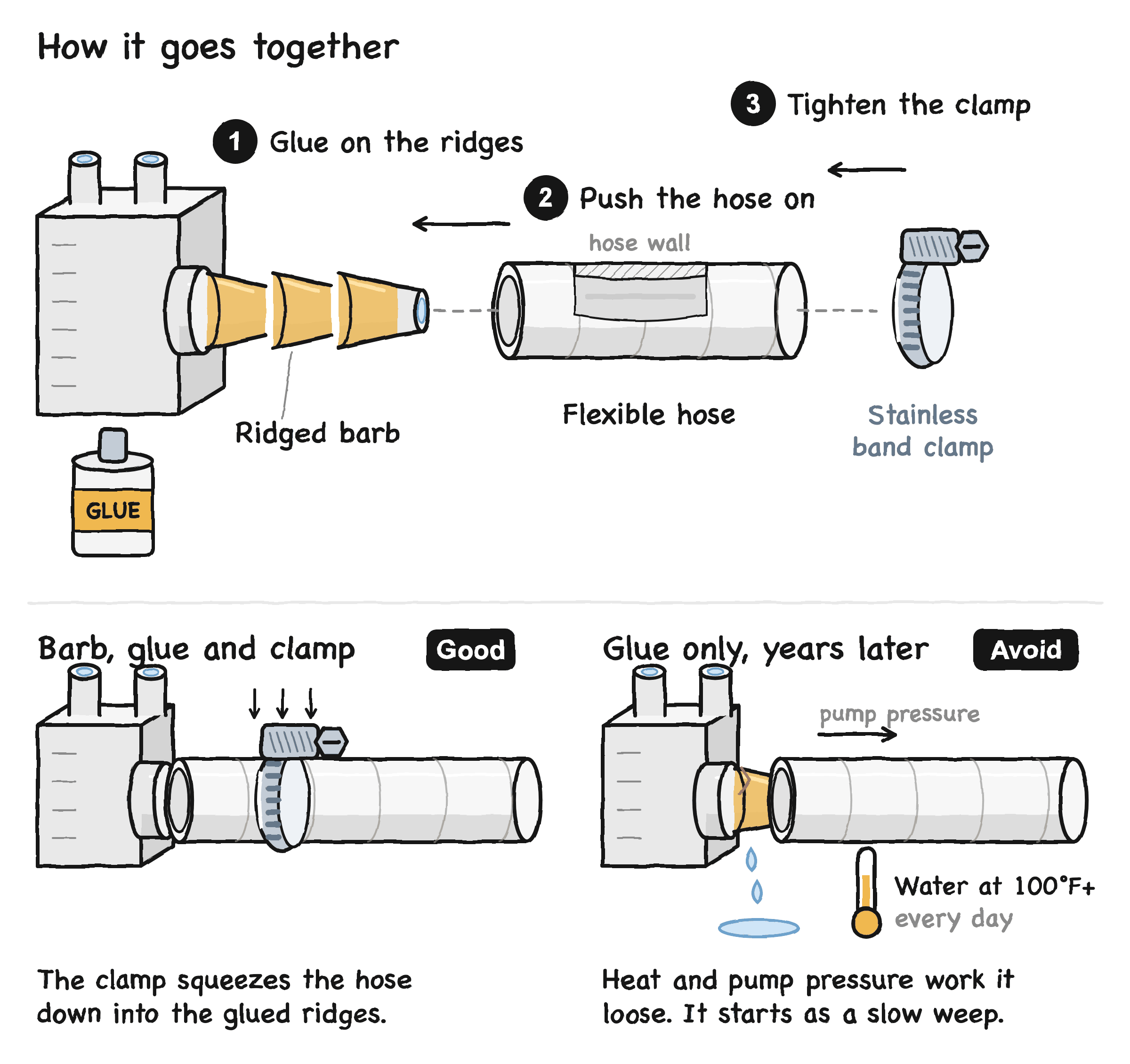
Barbed, glued and clamped. Behind the cabinet, flexible hoses run from the pumps to every jet, pushed onto ridged fittings called barbs. The best builds use the ridges, glue and a stainless clamp. Glue alone is fine when the tub is new, but the water sits at 100°F or more for years, and warm PVC is weaker: at 100°F, pipe keeps about 62% of its pressure rating.
A joint that lets go starts as a slow weep you won't see. Where it is decides the bill: from about $200 when a technician can reach it to more than $2,000 when it's buried in foam. More on clamped plumbing.
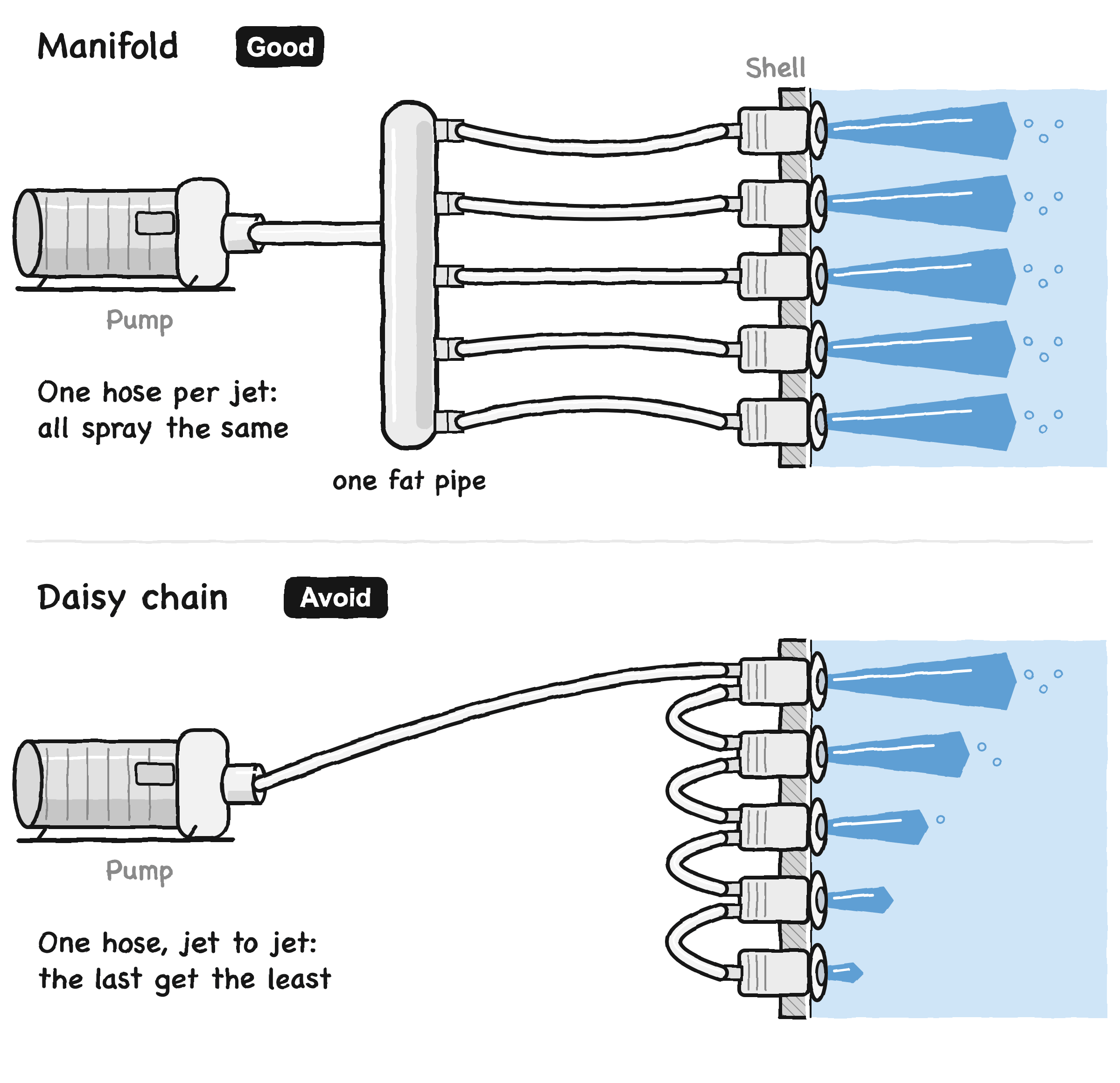
Fed from a manifold. A manifold gives every jet its own hose from one fat pipe near the pump. A daisy chain runs one hose from jet to jet, so the last ones get the least, like the last sprinkler on a garden hose. That weak seat shows up on day one, and only re-plumbing fixes it. See manifold vs daisy chain.
Full foam or perimeter insulation?
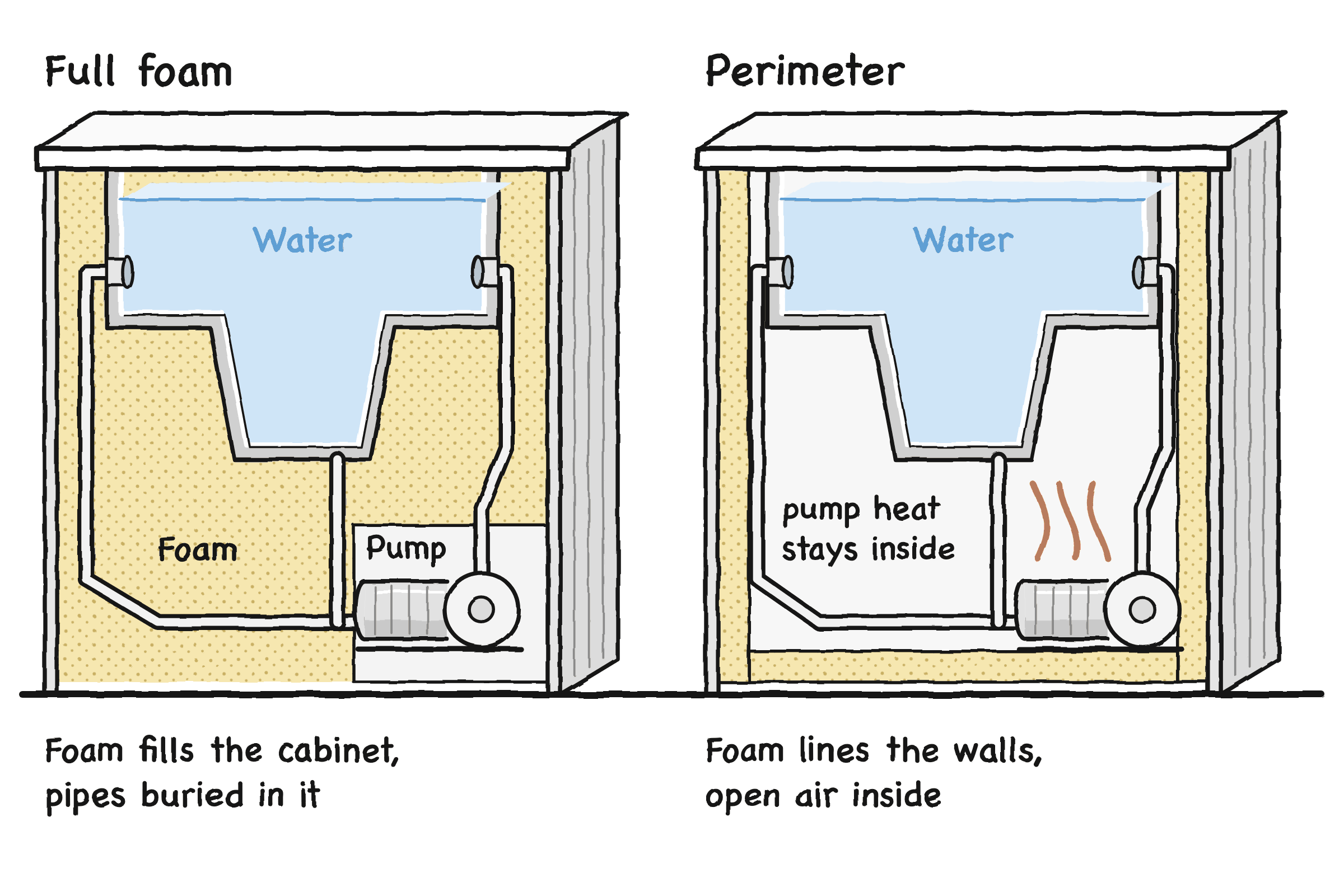
Full foam fills the cabinet and buries the pipes. Perimeter insulation lines the walls and floor and leaves an air pocket around the plumbing. In California's standby test, the median full-foam tub drew about 9% less power than the median perimeter tub. But how well it's installed matters more than the label: same-size tubs can differ by $20 a month or more. So compare what each tub costs to keep hot, not the insulation name. And remember the plumbing: a leak inside full foam has to be dug out. More on insulation.
Can it be fixed in year eight?
Pumps, heaters and circuit boards wear out on every brand, usually somewhere between years five and ten. Five checks decide how painful that is.
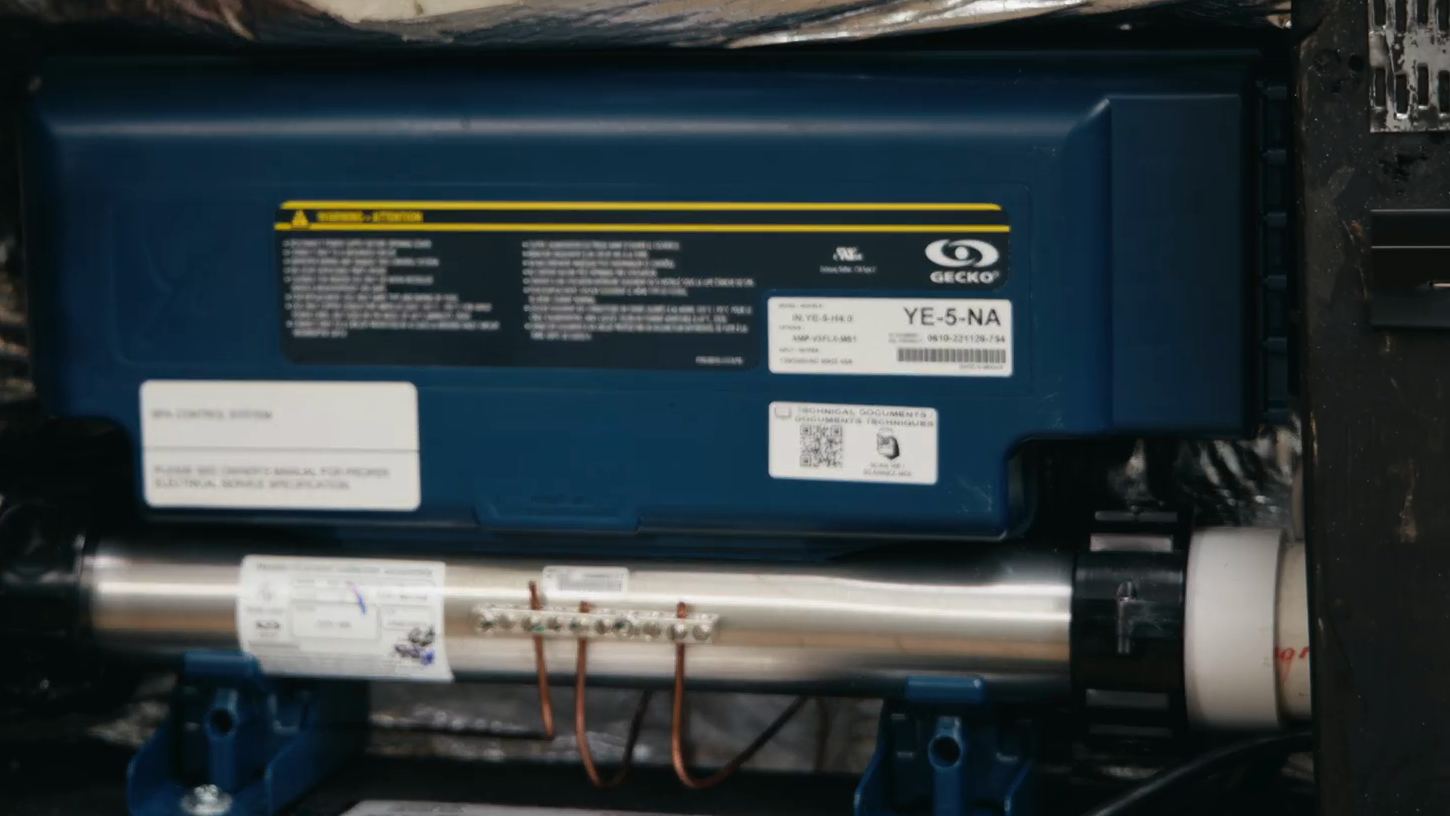
Standard parts. Parts from big suppliers like Balboa, Gecko and Waterway are sold by many stores; independent shops sell standard control packs for about $479 to $999. Proprietary parts come from one maker, at its price, for as long as it makes them.
Compression-fitted jets. Behind each jet, the jet body sits in a hole in the shell. On a good tub a rubber gasket and a back nut hold it, so a leak is fixed by resealing it; a glued-in body has to be cut out. The insert you see should also twist out by hand.
Jets you can turn down. Each person should be able to turn their own jets up or down from the seat. Some jets only change their aim.
A technician nearby. Every repair is a house call. One dealer's posted rates: $169 to diagnose, $89 an hour after that, and $3.75 a mile past 60 miles round trip.
American made? A shell or a cabinet panel only comes from the factory that owns the mold, so the factory decides how long you wait. A plain “Made in USA” claim means all or virtually all of it, under FTC rules.
How do you check the build in the showroom?
Most of this is hidden, so ask to see it. A good dealer will pull a cabinet panel or show you a cutaway.
Behind one panel: the control box, with the heater below it. · Master Spas
Press hard on each seat of an empty display tub. It should feel like a floor.
Look in the equipment bay: clamps on the hoses, foam around the pipes or not, and the names on the pumps and control box.
Ask them to pop a jet out. By hand, no tools.
Run the jets and cover one with your palm. If its neighbors jump hard, they share a line.
Read the warranty card: is the shell covered against cracking, or only against leaking?
Ask the dealer
Shell: Does this shell hold its shape on its own?
Plumbing: Are the hoses clamped at the barbs, or only glued?
Jets: Does each jet get its own hose from a manifold?
Insulation: If a pipe leaks inside the foam, how do you reach it?
Parts: Who makes the pumps and the control pack?
Jet inserts: Can I buy replacements anywhere but here?
Service: Where's the nearest technician, and do they work for you?
Factory: Where would a new shell ship from?
That's the part that lasts. Next, the part that sells: jets, pumps and features. Every check, brand by brand, is in the 8 build checks.
Remember this
A self-supporting shell holds itself up; one propped on posts or foam flexes, and cracks over the years.
Hoses should be barbed, glued and clamped, and each jet fed from a manifold.
Compare what a tub costs to keep hot, not the insulation's name.
Standard parts and a technician nearby decide what year eight costs you.
Ask to see the equipment bay. A good dealer will open a panel.
Check yourself
3 quick questions. Tap an answer.
Why does a self-supporting shell matter?
You cover one jet with your palm and the jets next to it jump hard. What does that suggest?
A pump fails in year seven. Which tub is the easiest fix?
Want more on this?
Each of these goes deeper. They open in the library; the course will be here when you come back.
8 more lessons: how a good tub is built, what it really costs, what to ask at the showroom and how to get the best price, then your showroom cheat sheet. It opens right away.