Jet count is the number brochures lead with and the one that tells you least: what you feel is the pump power behind your seat. Ozone, UV and salt each cut the chlorine you need, but none replaces it. Of the extras, a good cover matters most.
In this lesson
Why jet count is the wrong number to compare
Ozone, UV and salt: what each does for the water
Which extras to pay for and which to skip
Why doesn't jet count matter?
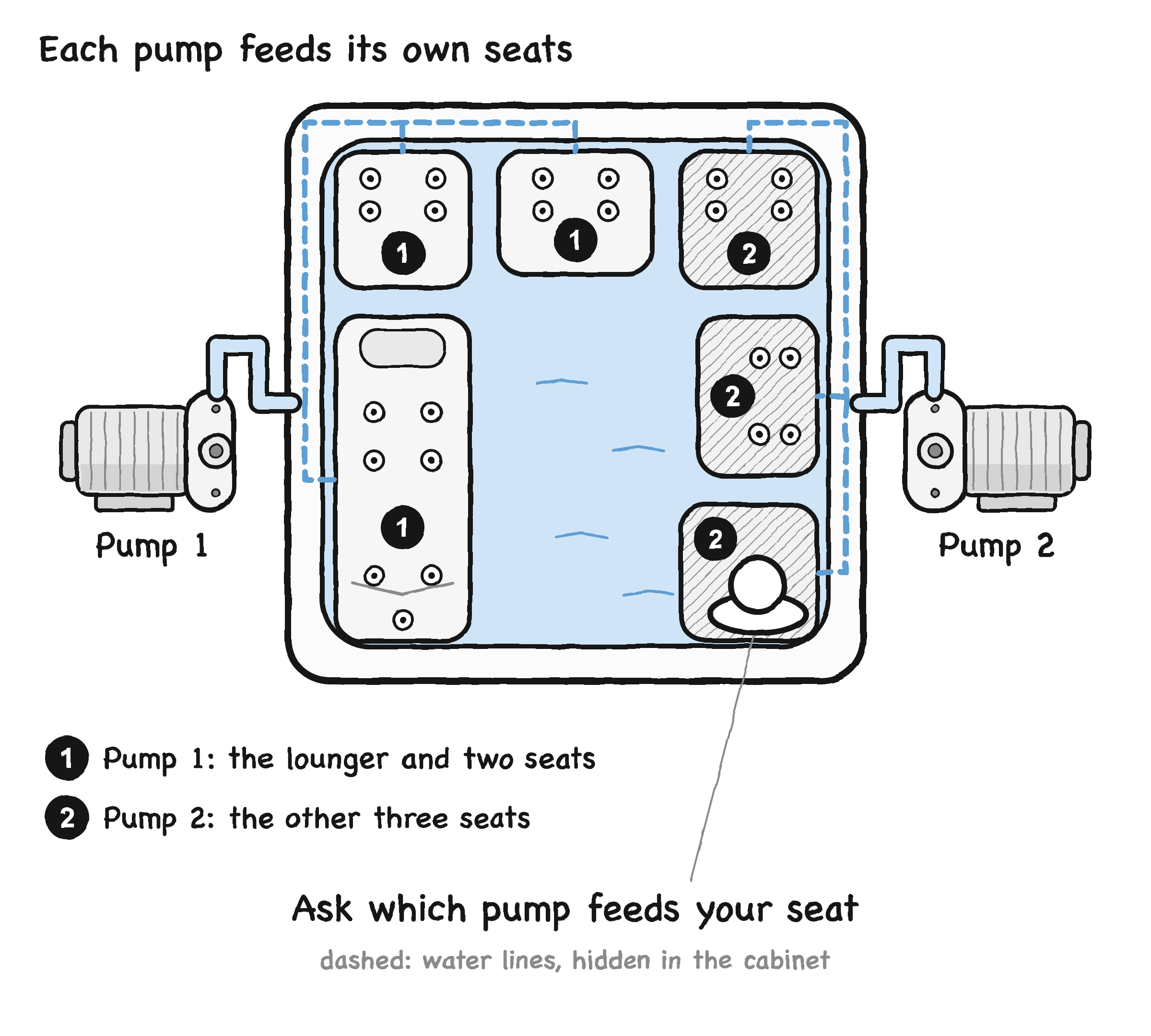
A jet is a nozzle fed by a pump. Every open jet on that pump takes a share of its water, so more jets on the same pump means each one pushes less. Sundance suggests 20 to 30 jets per pump, and says 50 jets on two dedicated pumps usually feel stronger than 100 sharing one modest pump. Jets aren't even counted the same way: PDC's Bali lists 143, and 73 of them are air outlets. The median tub we track has 43 jets on 2 pumps.
So ask which pump feeds the seat you'll use, and how strong it is. Ask for continuous horsepower, not brake horsepower, which is a peak the motor can't hold: one guide puts a 3 BHP motor at about 1.5 continuous. Or compare the amps on the motor label instead. Then sit in that seat to see where the jets line up with your back, and feel their pressure with the back of your hand on a running display tub. More on jets and pump power.
Ozone, UV, salt: do you still need chlorine?
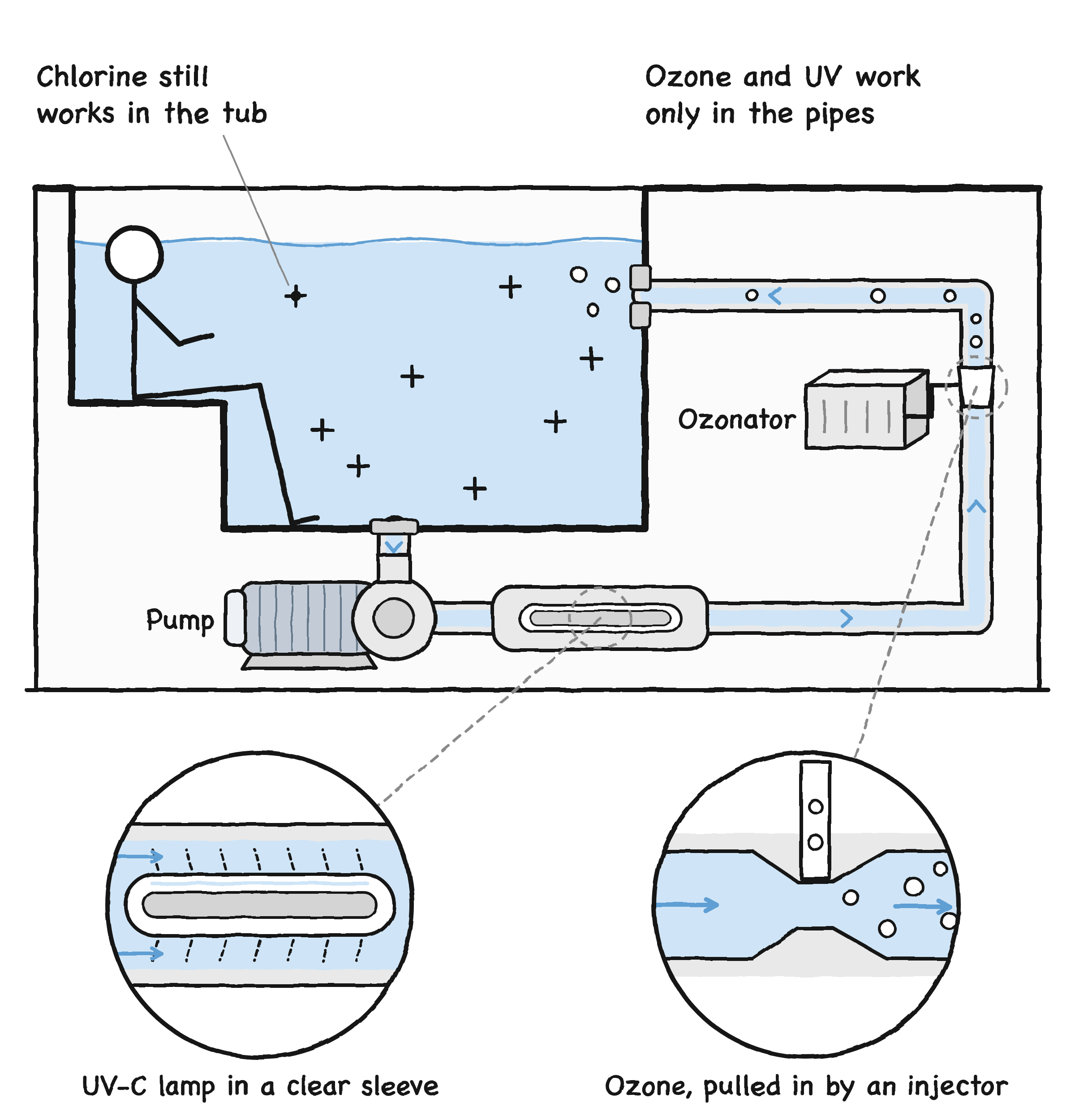
Yes. Ozone is a gas drawn into the plumbing that breaks down oils and germs, then turns back into oxygen. UV-C is a lamp in the plumbing that treats only the water flowing past it. Neither leaves anything working in the tub where you sit, and NSF/ANSI 50, the standard for this equipment, requires a registered sanitizer such as chlorine alongside it.
What they do is cut how much chlorine you need. Both wear out: an ozone maker says to replace a unit after about 3 years, and Jacuzzi says to replace its UV lamp every 12 months. Take them if they come standard; don't pay much extra. See ozone vs UV.
Salt systems make chlorine from salt dissolved in the water, so a salt tub is still a chlorine tub, and the process pushes pH up and scales the cell. Buy one only as a factory system the tub's maker warranties, and budget for cells: Hot Spring's cartridge is $129.99 and lasts about four months; Master Spas' cell is about $350 and is replaced about yearly. See salt water hot tubs.
Is a better cover worth paying for?
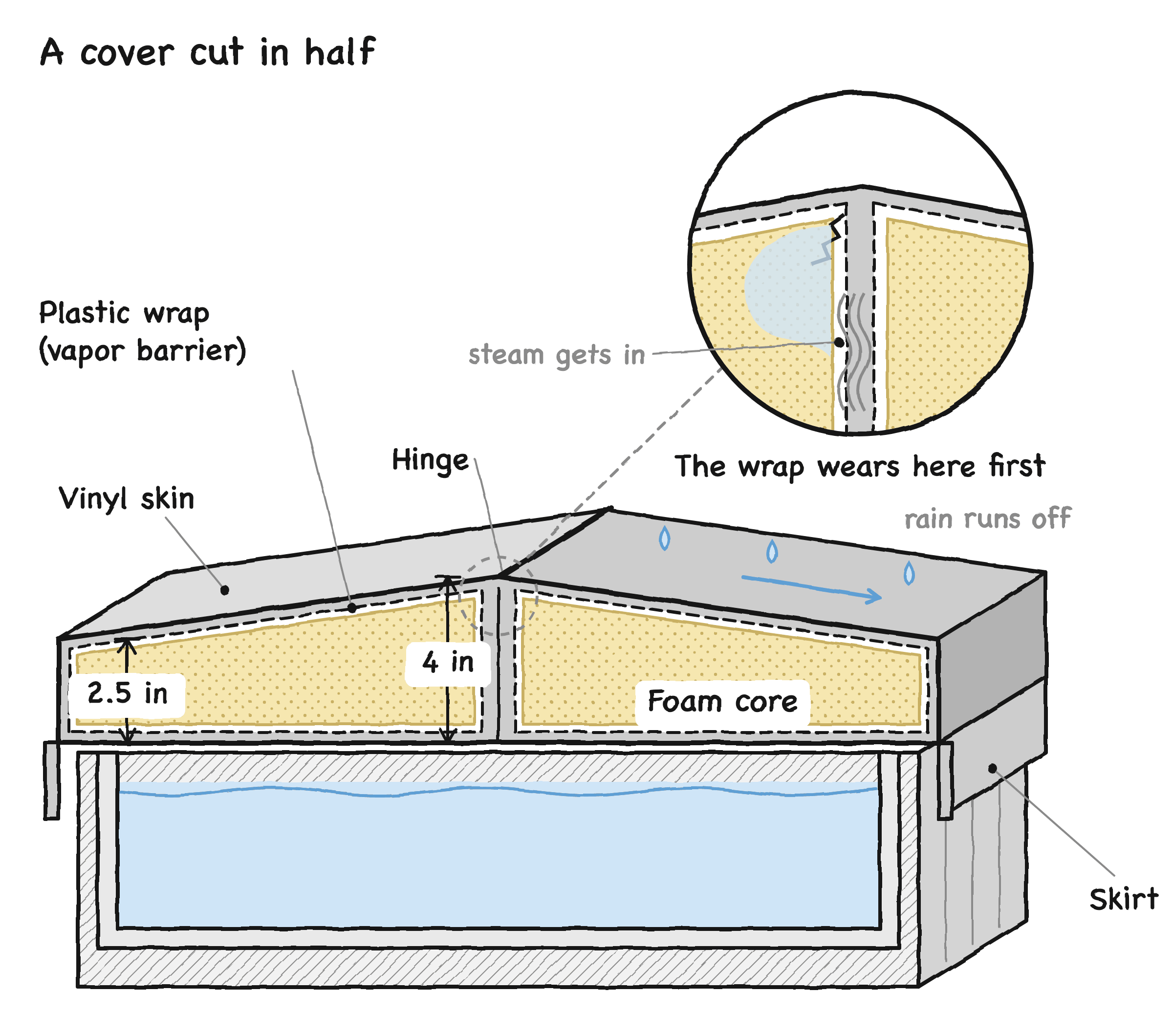
Yes. California's Energy Commission names insulation and the cover as the biggest energy savings in a spa, and puts a cover's life at about five years. The usual story: the plastic wrap around the foam wears at the hinge, steam gets in, the foam soaks up water, and the cover turns heavy and sags.
Ask what foam is inside and how the hinge is sealed. And read the warranty before you replace one: some makers leave the cover out, and one says a non-brand cover voids its shell warranty. More on covers.
Lights, audio, waterfalls, apps: worth it?
Lights: nice to have. Nearly every tub has an underwater light, and one covers night soaks. Pay for a light show only if you'll use it.
Audio: skip. Bullfrog covers its audio for one year, and a dealer lists a replacement head unit at $766. A waterproof portable speaker does most of the job.
Waterfalls: skip. Water thrown through cool air loses heat you pay to replace, and it adds parts.
Wi-Fi apps: it depends. Worth it at a cabin or in a cold climate, where a fault alert can save the plumbing from freezing. Check the fees: Jacuzzi's SmartTub costs about $50 a year after six free months.
Every feature, rated, is on hot tub features. Next: where it goes, and what has to be ready before it arrives.
Remember this
Compare the pump power behind your seat, not the jet count.
Ask for continuous horsepower or amps, not brake horsepower.
Ozone, UV and salt cut chlorine; none of them replaces it.
A good cover is worth paying for; plan on a new one about every five years.
Lights are nice to have; built-in audio and waterfalls are a skip.
Check yourself
3 quick questions. Tap an answer.
Tub A has 60 jets on one pump. Tub B has 40 jets on two pumps. Which likely feels stronger at your seat?
A salesperson says the tub's UV system means you won't need chlorine. Is that right?
Which of these is most worth paying for?
Want more on this?
Each of these goes deeper. They open in the library; the course will be here when you come back.
8 more lessons: how a good tub is built, what it really costs, what to ask at the showroom and how to get the best price, then your showroom cheat sheet. It opens right away.