Jacuzzi J-345 vs J-365 hot tubs compared
Short answer
The Jacuzzi J-345 seats 7 with no lounger in 84 x 84 in; the J-365 seats 7 with no lounger in 84 x 91 in. The J-345 has 41 jets to the J-365's 46, as the maker counts them.
| Measure | 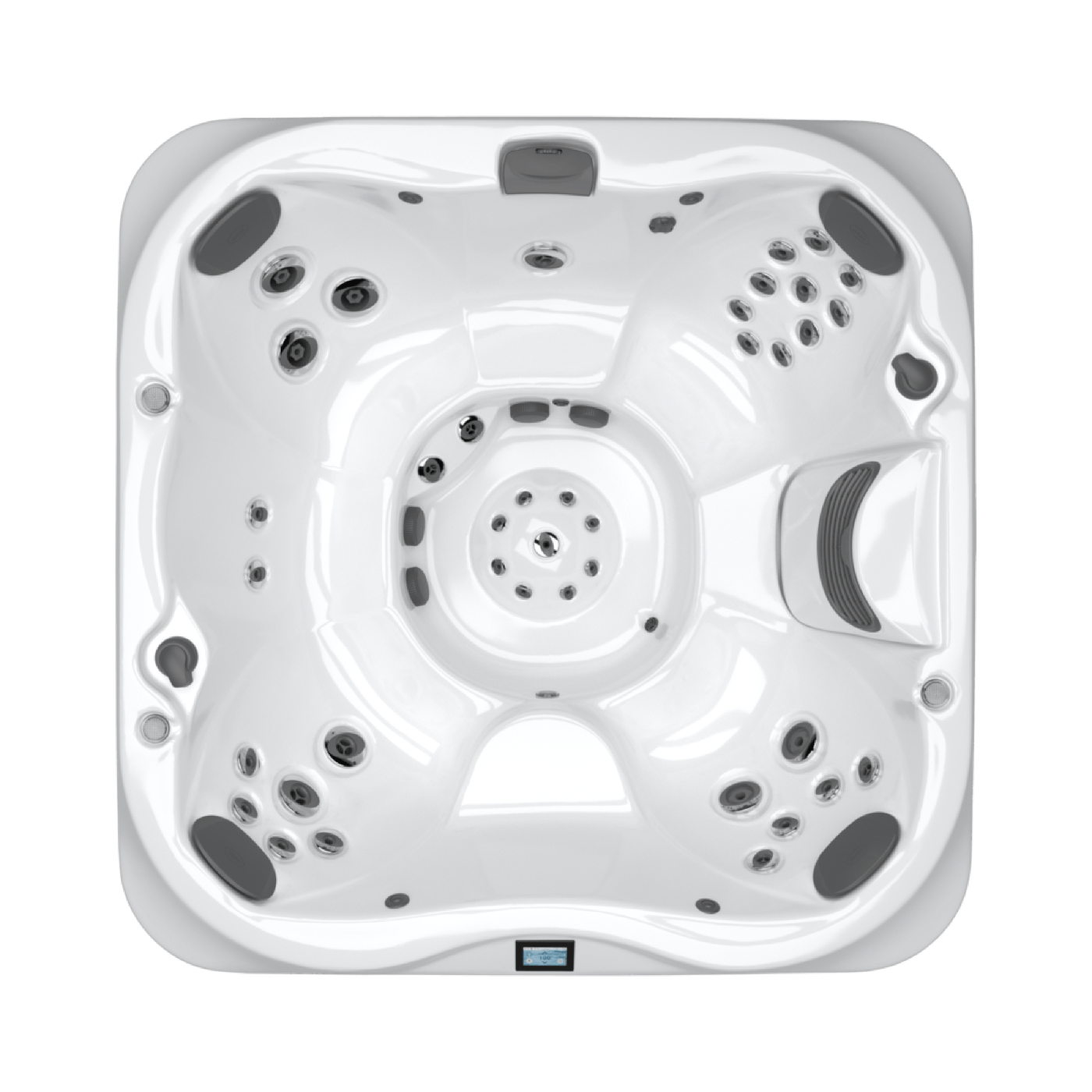 Jacuzzi J-345J-300 Collection | 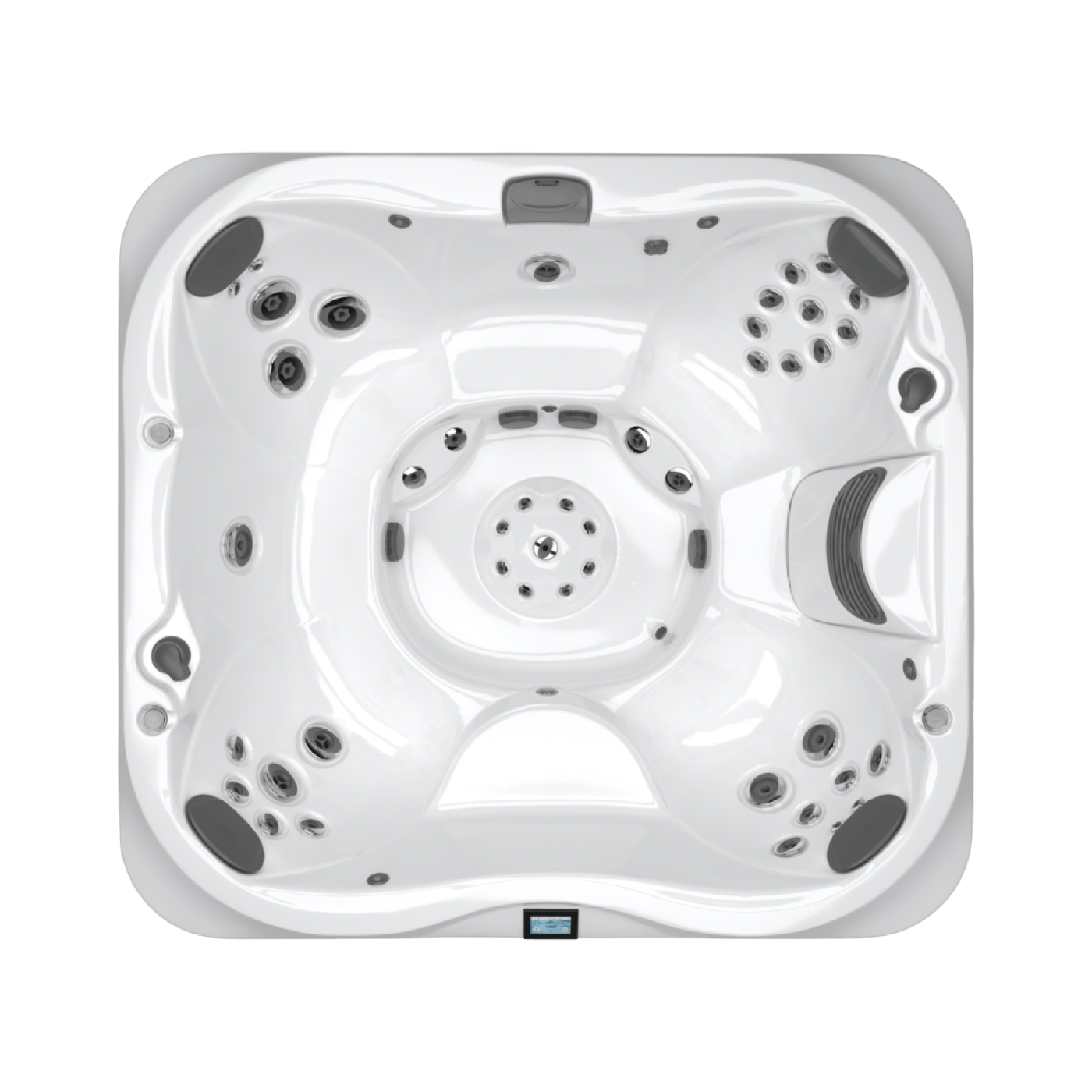 J-365J-300 Collection |
|---|---|---|
| Lineup | ||
| Series | J-300 Collection | J-300 Collection |
| Size | ||
| Seats | 7 | 7 |
| Length | 84" | 84" |
| Width | 84" | 91" |
| Height | 36" | 37.5" |
| Water | 345 gal | 395 gal |
| Dry weight | 777 lb | 805 lb |
| Filled weightwater, no people | 3,654 lb | 4,099 lb |
| Jets and pumps | ||
| Jetsas the maker counts them | 41 | 46 |
| Jet pumps | 2 | 2 |
| Electrical | ||
| Voltage | 240V | 240V |
| Breaker | 40A: 26A draw; 50A: 37A draw (factory setting); 60A: 48A draw | 40A: 26A draw; 50A: 37A draw (factory setting); 60A: 48A draw |
| Heaterat 240V | 5.5 kW | 5.5 kW |
| Build and water care | ||
| Shell | acrylic | acrylic |
| Cabinet | ProFinish™ cabinetry | ProFinish™ cabinetry |
| Filter area | 60 sq ft | 60 sq ft |
| Ozone | Yes | Yes |
| UV | Yes | Yes |
| Warranty | ||
| Shell structure | 10 years | 10 years |
| Shell surface | 7 years | 7 years |
| Equipment | 5 years | 5 years |
| Plumbing | 5 years | 5 years |
| Cabinet | 5 years | 5 years |
Verdict: The Jacuzzi J-345 suits buyers who want a smaller footprint (84 x 84 in), a lighter load on a deck (3,654 lb filled) and less water to heat and treat (345 gal). The J-365 suits buyers who want more jets (46 against 41) and a roomier shell (84 x 91 in).
No manufacturer pays us. How we make money
What is the difference between the Jacuzzi J-345 and J-365?
Both seat 7. The J-345 measures 84 x 84 x 36 in and the J-365 84 x 91 x 37.5 in. The J-345 has 41 jets to the J-365's 46, as the maker counts them.
Both are Jacuzzi hot tubs from the J-300 Collection. Every figure is the maker's own, with a dot that links the page or PDF it came from. Where the published specs differ:
Will the J-345 or the J-365 fit my space and deck?
The J-345 is 84 x 84 in, about 49 sq ft and 36 in tall; filled, it weighs 3,654 lb, about 75 lb per sq ft before anyone gets in. The J-365 is 84 x 91 in, about 53 sq ft and 37.5 in tall; filled, it weighs 4,099 lb, about 77 lb per sq ft before anyone gets in. Leave room around the tub for the cover lifter and the service panel, and have a builder check any deck for the filled weight plus people. See hot tub sizes, hot tub weight and what to put a hot tub on.
What electrical hookup do the J-345 and J-365 need?
The J-345 runs on 240V. The J-365 runs on 240V. The table lists amperage and breaker as each maker prints them. A licensed electrician sizes the circuit and the GFCI protection for the model you buy. See hot tub electrical requirements.
Do the J-345 and J-365 carry the same warranty?
Jacuzzi J-345: 10 years on the shell structure, 7 years on the shell surface, 5 years on the equipment, 5 years on the plumbing and 5 years on the cabinet.
Jacuzzi J-365: 10 years on the shell structure, 7 years on the shell surface, 5 years on the equipment, 5 years on the plumbing and 5 years on the cabinet.
Read the warranty card before you sign: labor after year one, travel charges, and whether coverage moves to a second owner. The hot tub warranty comparison lines up every brand.
Which costs less to run, the J-345 or the J-365?
The J-345, by 18 W on standby, about $2.39 a month. Standby is what a tub draws to hold its temperature with the cover on and nobody in it. California tests it the same way for every spa sold in the state, so it is the fairest running-cost figure we have.
The J-345 draws 180 W in California's standby test (filed at 345 gallons), about 131 kWh and $23.90 a month at the U.S. average rate. 69% of the 131 filed tubs its size draw more; their median is 197 W.
The J-365 draws 198 W in California's standby test (filed at 395 gallons), about 145 kWh and $26.29 a month at the U.S. average rate. 71% of the 121 filed tubs its size draw more; their median is 218 W.
Costs use the U.S. average residential rate of 18.19¢ a kWh (January to July 2026, EIA). Your own rate, climate and how often you use the jets change the bill. Hot tub running cost works it out by state, and measured standby watts lists every filed model.
What to check in the showroom
- Sit in both, dry is fine, in the seat you would use most. On a running display tub, feel the jets with the back of your hand. Seat depth and where the jets land matter more than the count.
- Climb in and out: step height and the lounger's length suit some bodies and not others.
- Ask for each model's California Energy Commission listing and the warranty card.
The full spec sheets: Jacuzzi J-345 hot tub and Jacuzzi J-365 hot tub. The series: Jacuzzi J-300 Collection.
Other model comparisons: Jacuzzi J-245 vs J-345.
Still deciding? Get the price range on both.
- Jacuzzi J-345Price on request
- Jacuzzi J-365Price on request
Free price range, then one dealer.
Common questions
What is the difference between the Jacuzzi J-345 and J-365?
Both seat 7. The J-345 measures 84 x 84 x 36 in and the J-365 84 x 91 x 37.5 in. The J-345 has 41 jets to the J-365's 46, as the maker counts them. The table lists every published figure side by side.
Which is bigger, the J-345 or the J-365?
The J-365: 84 x 91 in, about 53 sq ft, against 84 x 84 in, about 49 sq ft for the J-345. The J-345 holds 345 gallons and the J-365 395.
Which costs less to run, the J-345 or the J-365?
The J-345: 180 W on standby against 198 W in California's tests, about $23.90 against $26.29 a month at the U.S. average of 18.19¢ a kWh (EIA, January to July 2026). Heating fresh water and running the jets add to that.
Do the J-345 and J-365 have the same warranty?
Yes, on the terms the maker publishes: shell structure 10 years, shell surface 7 years, equipment 5 years, plumbing 5 years and cabinet 5 years.
Sources
6
- Jacuzzi J-345 product pagemaker's specifications
- Jacuzzi J-345 specification sourcesize, jets and electrical
- Jacuzzi J-365 product pagemaker's specifications
- Jacuzzi J-365 specification sourcesize, jets and electrical
- California Energy Commission appliance database (spas)standby watts
- EIA Electric Power Monthly, Table 5.6.BU.S. average residential rate, 18.19¢ a kWh, January to July 2026