Hot tub water chemistry, level by level
Short answer
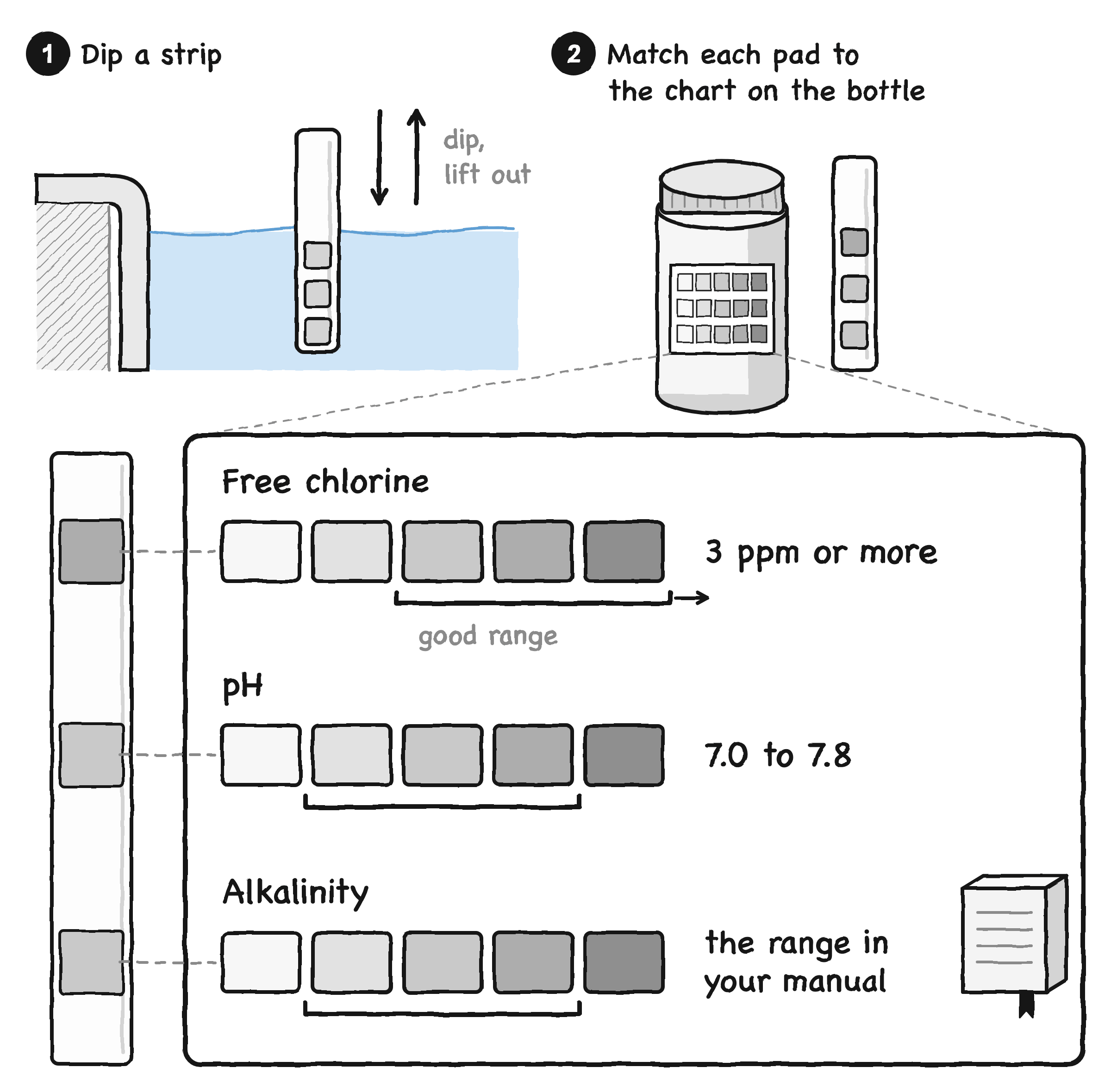
Keep free chlorine at 3 ppm or more, or bromine at 4 to 8 ppm, with pH between 7.0 and 7.8. Those are CDC's figures; makers add alkalinity and calcium targets, and their ranges differ.
What CDC and each maker's manual say
7 sources
| Free chlorine | pH | Total alkalinity | Bromine | Calcium hardness | |
|---|---|---|---|---|---|
| CDCAdvice for hot tub users | 3 ppm or more | 7.0 to 7.8 | Not given | 4 to 8 ppm | Not given |
| CDC Legionella toolkitWritten for public and display hot tubs | 3 to 10 ppm | 7.2 to 7.8 | Not given | 4 to 8 ppm | Not given |
| BullfrogX Series manual, 2026 | 3.0 to 5.0 ppm | 7.2 to 7.6 | 80 to 120 ppm | 3.0 to 6.0 ppm | 150 to 250 ppm |
| Hot SpringHighlife manual, 2026 | 3 to 5 ppm (1 to 5 acceptable) | 7.2 to 7.8 | 40 to 120 ppm | Granular only; no range given | 75 to 150 ppm |
| JacuzziJ-300 manual, 2025; chlorine figure is for its cartridge system | 0.5 to 1.0 ppm | 7.4 to 7.6 | 100 to 150 ppm | Not given | 150 to 250 ppm |
| Master SpasTwilight manual, 2026 | 2 to 4 ppm | 7.2 to 7.6 | 80 to 150 ppm | 3 to 5 ppm | 180 to 250 ppm |
| Sundance880 manual, 2025; without its UV system running | 3.0 to 4.0 ppm | 7.4 to 7.6 | 100 to 150 ppm | 2.0 to 4.0 ppm | 150 to 250 ppm |
What does each hot tub chemical level do?
Five numbers run the water, and each one leans on the others. Think of sanitizer as the cleaner, pH as the condition it works in, and alkalinity as the shock absorber that keeps pH from swinging.
- Sanitizer (chlorine or bromine) kills germs. The part still able to work is the free or residual level; once it has combined with sweat and oils it is spent. See hot tub chlorine levels.
- pH is how acidic the water is. Low pH corrodes metal and eats sanitizer; high pH clouds the water, lays scale on the heater and slows chlorine down. Master Spas' manual notes that above pH 7.5 less than half of the free chlorine is in its active form. See hot tub pH.
- Total alkalinity buffers pH. Too low and pH bounces; too high and pH won't move. See hot tub alkalinity.
- Calcium hardness is dissolved calcium. Too much scales the heater and clouds the water; too little is hard on equipment and makes water foam. See calcium hardness.
Why do maker manuals give different numbers?
Because each maker writes for its own tub and its own water care system. The widest gap is calcium: Hot Spring sets 75 to 150 ppm, Master Spas 180 to 250 ppm. Jacuzzi's 0.5 to 1.0 ppm chlorine applies only with its cartridge sanitizing system; without one, its manual points owners to the Pool & Hot Tub Alliance figures. Sundance allows a lower chlorine floor while its UV system runs.
Follow your own manual when it is tighter than CDC. Warranties lean on it: Bullfrog's says its limited warranty may be voided by damage from not maintaining the spa as the manual describes.
In what order do you adjust hot tub chemicals?
Alkalinity first, then pH, then calcium, and sanitizer last. Bullfrog says to bring alkalinity into range before touching pH, even if that pushes pH further off for a while. Hot Spring's start-up sets alkalinity and calcium, then pH. Master Spas adds chlorine only after pH, alkalinity and calcium are where they belong.
The wait between adjustments varies by manual. Master Spas says wait 15 minutes, test and adjust again; Bullfrog says 6 hours before retesting balancing chemicals. Use your maker's figure.
How often should you test hot tub water?
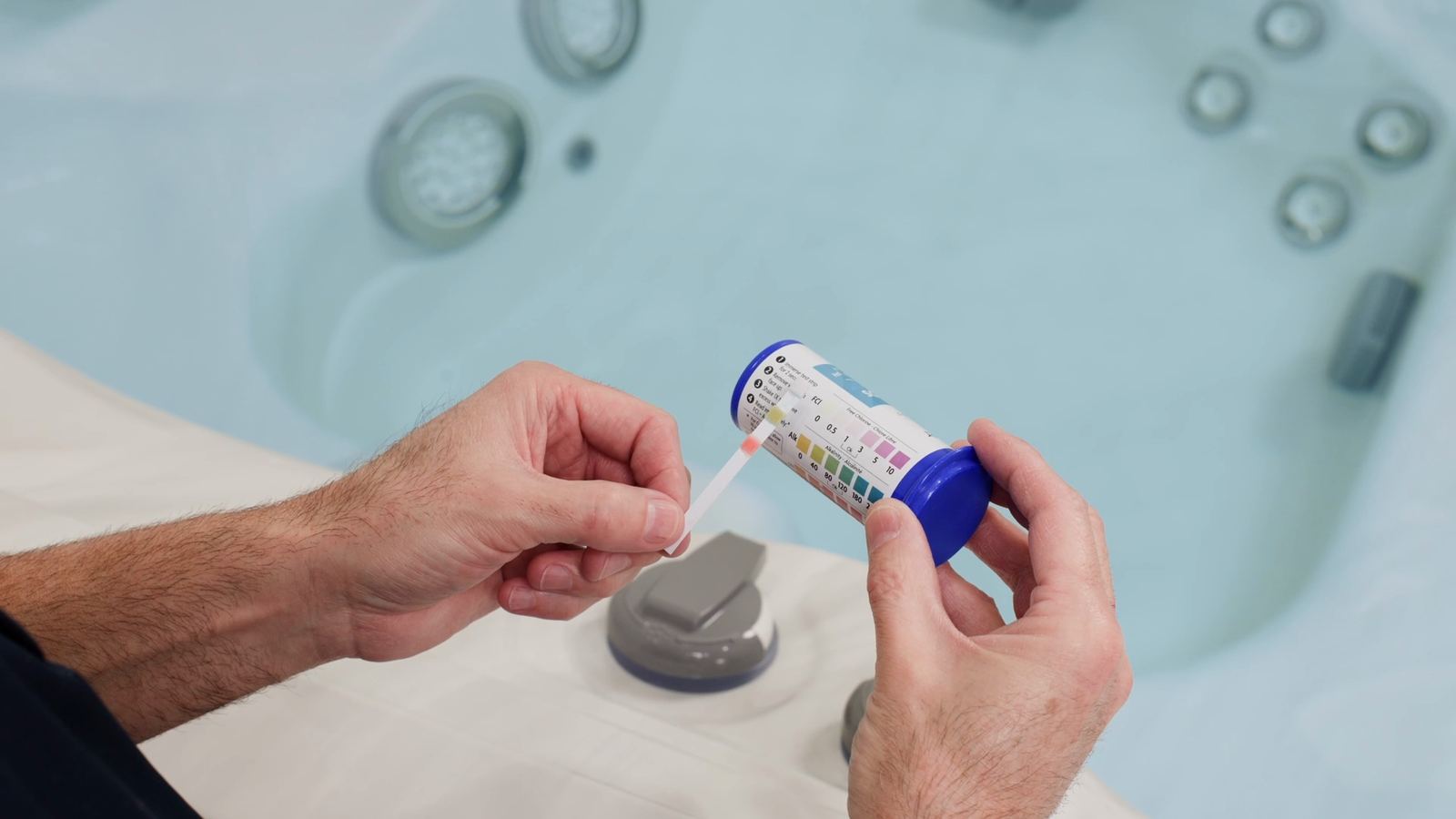
Before you get in, and a few times a week at least. Master Spas says test before and after each use, and with strips three times a week. Hot Spring says to test sanitizer daily in the first month to learn how much your household uses. CDC asks public hot tub operators to test chlorine and pH at least twice a day, which shows how fast a busy tub moves. More on test strips and kits.
How much to add
The product label sets the dose, by your tub's gallons.
Strengths differ between brands of the same chemical, so we don't print amounts. Test, read the label, add a little at a time with the jets running, wait, and test again. Your tub's gallons are in its manual or in our gallons and filter size table.
The details
The full tables, the figures behind each sentence and where they come from.
Common questions
What should hot tub chemical levels be?
CDC says free chlorine at 3 ppm or more, or bromine at 4 to 8 ppm, and pH between 7.0 and 7.8. Makers add total alkalinity (usually 80 to 150 ppm) and calcium hardness (75 to 250 ppm depending on the maker).
Which hot tub chemical do you adjust first?
Total alkalinity, then pH, then calcium, with sanitizer last. Bullfrog, Hot Spring and Master Spas all print an order along those lines.
Why does my hot tub manual give different numbers from the CDC?
CDC sets the minimum for health; each maker sets ranges for its own shell, equipment and sanitizing system. Where the manual is tighter, follow the manual.
Sources
8
- CDC: What you can do to stay healthy in hot tubsChlorine at least 3 ppm, bromine 4 to 8 ppm, pH 7.0 to 7.8, water no hotter than 104°F
- CDC: Home pool and hot tub water treatment and testingpH 7.0 to 7.8, no cyanuric acid in hot tubs, DPD kits more accurate than strips
- Bullfrog X Series owner's manual, 2026
- Hot Spring Highlife Collection owner's manual, 2026
- Caldera Paradise Series owner's manual, 2026
- Jacuzzi J-300 Collection owner's manual, 2025 (Rev E)
- Master Spas Twilight Series owner's manual, 2026
- Sundance 880 Series owner's manual, 2025 (Rev E)
Ten questions, three tubs that fit you.
Take the 2-minute quizWhat a good deal looks like, then one dealer near you.
Get the price range